

Tree Climbing Courses
Tree Climbing for Science & Research -TSR Levels 1–3
The TSR Level 1–3 courses are designed for scientists, researchers, and environmental practitioners working in forest canopies.
Combining techniques from arboriculture, rope access, and remote fieldwork, the training provides the skills and knowledge needed to work safely and effectively at height for scientific research and data collection.
Successful completion leads to TSR certification. The courses are based on recognised industry standards and relevant health and safety legislation for work at height.
Please note: TSR certification is intended for research and environmental fieldwork and does not qualify participants to work as commercial arborists.

All prices are quoted per person and exclude VAT.
To ensure high-quality instruction and adequate time for practical learning, all courses operate with a maximum instructor-to-student ratio of 1:4 and are taught in English
Pre-course requirements for each participant include
• Valid First Aid certificate
• In Germany - arbeitsmedizinische Untersuchung (G41)
These courses combine a significant amount of technical information with physically demanding practical skills. We strongly recommend allowing time during the evenings for additional reading, rest, and recovery throughout the course week.
-
-
Duration: 5 Days
Price: €990 Inclusive of all PPE/PSA Equipment
Participants: Minimum 2 -
Level 2
Duration: 6 Days
Price: €1200 per person Inclusive of all PPE / PSA equipment
Participants: Minimum 2Duration: 6 Days
Price: €1200 per person Inclusive of all PPE / PSA equipment
Participants: Minimum 2 -
Level 1 & 2 Combined
Duration: 6 Days
Price: €1200 per person Inclusive of all PPE / PSA equipment
Participants: Minimum 2Duration: 6 Days
Price: €1200 per person Inclusive of all PPE / PSA equipment
Participants: Minimum 2 -
Expedition & Remote Fieldwork Training
Our expedition courses teach the same core principles and techniques as Levels 1 and 2, but with a focus on adapting those skills to remote fieldwork, difficult environments, and expedition-style research projects.
Our expedition courses teach the same core principles and techniques as Levels 1 and 2, but with a focus on adapting those skills to remote fieldwork, difficult environments, and expedition-style research projects.
-
Refresher Training
Duration: 1-2 Days
Price:
€200 — 1 Day
€350 — 2 Days
€25 per person for full equipment setup
Participants: Minimum 2Duration: 1-2 Days
Price:
€200 — 1 Day
€350 — 2 Days
€25 per person for full equipment setup
Participants: Minimum 2
-
Training Locations
Courses are primarily run in and around Tübingen, where we have access to suitable training sites and established climbing locations.
Away courses for universities, research groups, organisations, and specific project teams can also be arranged where appropriate trees and climbing permissions are available.
Please note that additional costs may apply for external locations, including:
* Travel expenses
* Accommodation (where required)
* Course setup and site preparation time
If you are considering hosting training at your own location, we recommend getting in touch early so we can discuss site suitability, permissions, logistics, and course requirements.
Please see below for available course dates
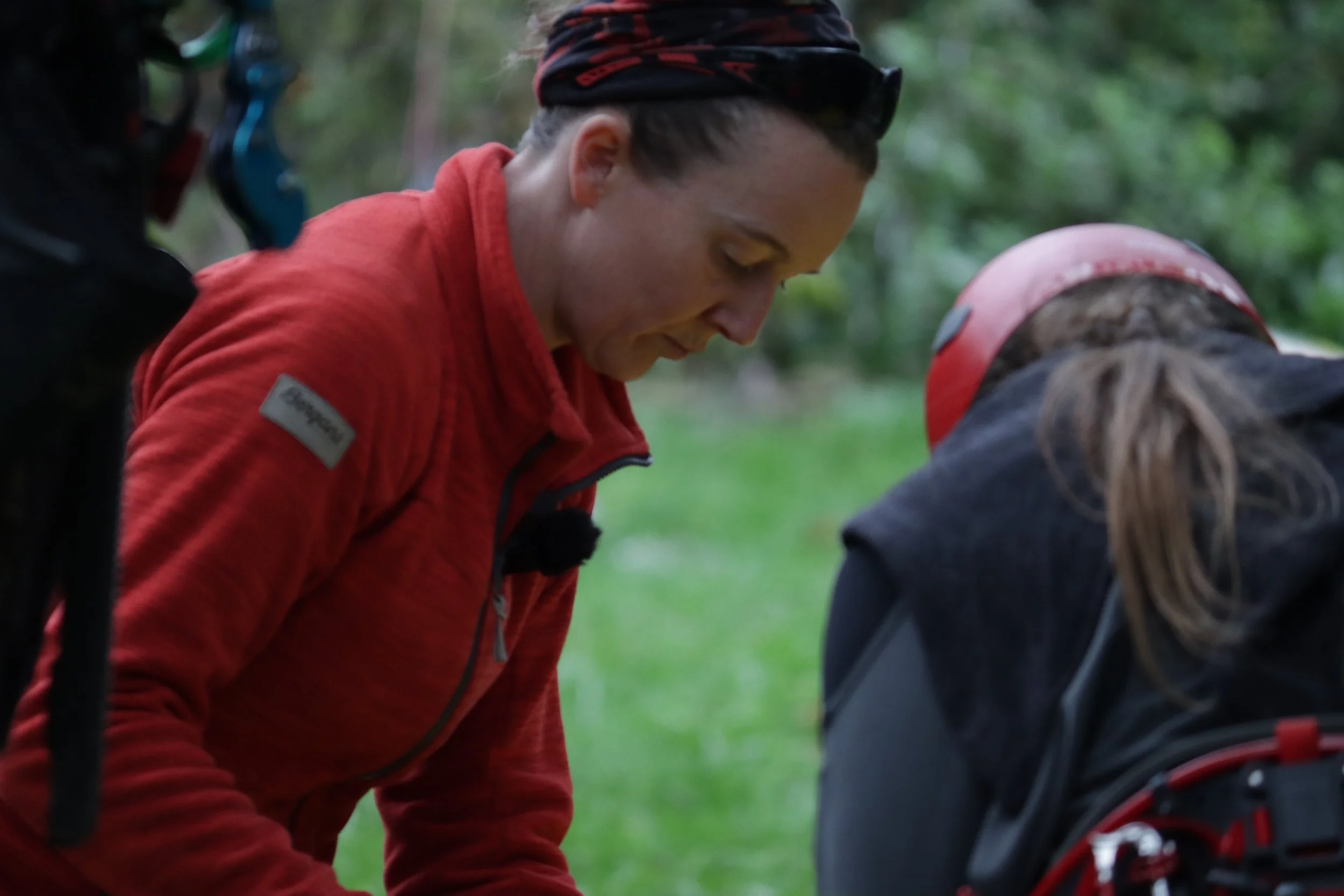
Book your
FREE
consultation
with Vicki to discuss what
course best suits you/your team
TREE CLIMBING
EXPEDITION QUESTIONNAIRE
If you are interested in or planning a project that involves tree climbing and have questions, please get in touch by filling in the Questionnaire. Sylvana Alta offers guidance and support at each stage of the decision making process covering subjects such as tree climbing training, equipment selection and maintenance, work at height solutions, budgeting and overseas logistics.
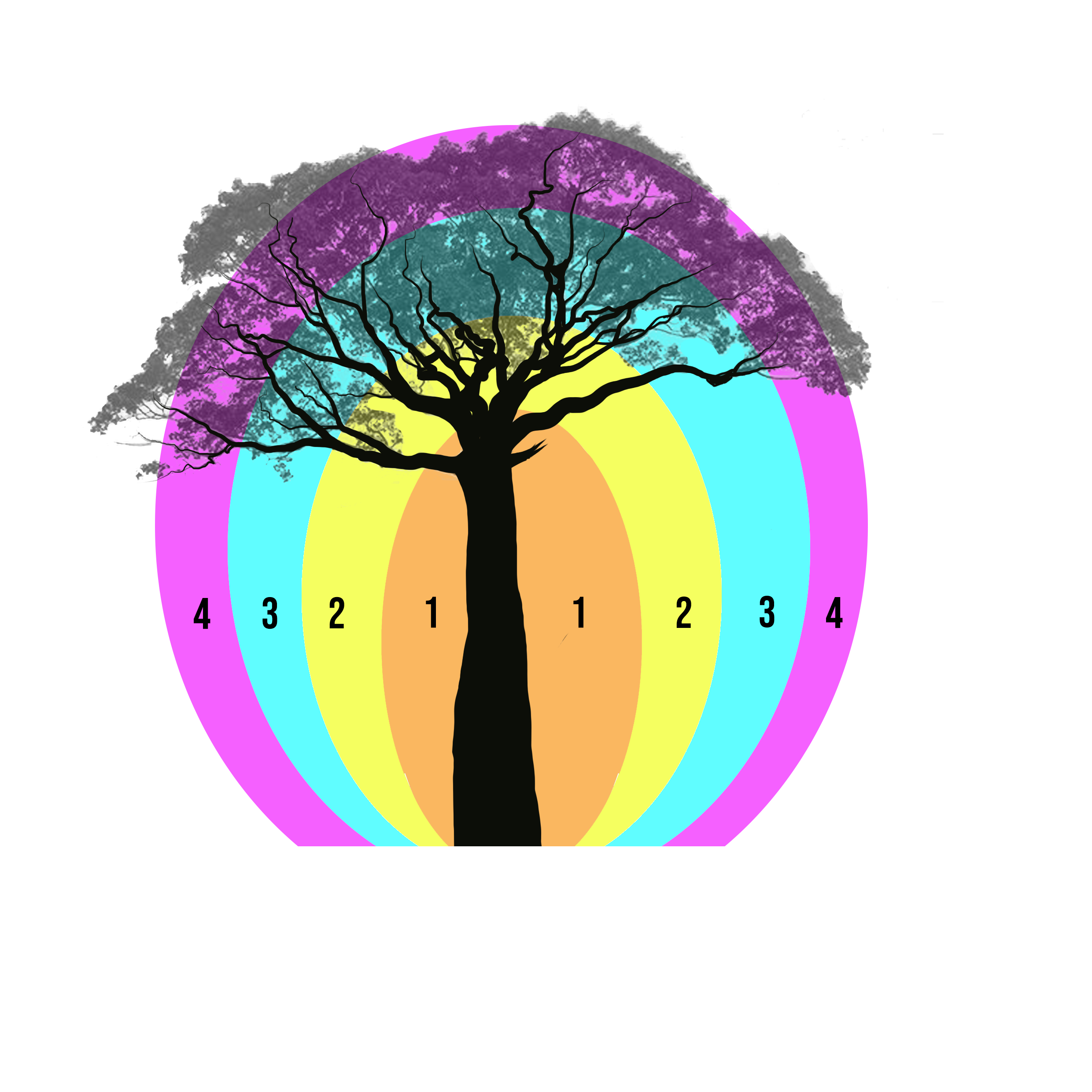
TREE ZONE AREAS
(Take note of which area you require for your training,
this is relevant to the questionnaire)
FAQs
-
Right, this is a difficult question to answer because everyone has a different idea of their own fitness level.
You don't need to be a professional rock climber or triathlon competitor, but don't underestimate the fact that we're here to learn how to climb trees using ropes and harness.
There's no fitness test, but you should be prepared to challenge yourself and push your limits. We're not looking for perfect technique or lightning-fast climbing we want you to perform the techniques safely and understand why you're doing them. Speed, strength and efficiency come with practice.
Tree climbing involves supporting and moving your own body weight in a three-dimensional environment, so body tension, balance and coordination are just as important as strength.
The good news? If you put the effort in, keep an open mind and are willing to work solid throughout the week, you'll probably surprise yourself with what you're capable of achieving.
By the end of the course, you should expect to be mentally and physically tired. If you're not, either I haven't done my job properly, or you haven’t!
Level 1 - Designed to be accessible to those with no climbing experience, using rope-climbing techniques that rely more on mechanical advantage than brute strength.
Level 2 - We move to climbing more of the tree structure during level 2 therefore it is more physically demanding and suited to those comfortable with the basics.
Level 1 & 2 Combined - Our most demanding course. You'll learn both climbing systems in the same timeframe, meaning more climbing, more learning and, most likely, more sore muscles.
Still not sure if your fitness level will be an issue? Get in touch and we'll happily talk it through.
-
You can find individual course prices on our Courses page, but like any technical skill, tree climbing requires an investment of both time and money.
Pre-course costs
Before attending a course, you'll need the required First Aid qualification and any medical assessments necessary for participation.
Course costs
Please see the Courses page for current course fees.
Equipment costs
Approximate equipment costs for two climbers are:
Level 1 - €5,000 – €6,000
Level 1 & 2 - €6,000 – €7,000
This includes all equipment for set-up and installation of the tree, personal protective equipment, storage and rescue considerations. Excluding any research or fieldwork equipment.
Ongoing costs
To maintain competency and comply with safety requirements, climbers should budget for annual refresher training, equipment inspections, and occasional equipment replacement or upgrades.
Equipment lifespan
Climbing equipment from reputable manufacturers is designed to last. Most equipment should not need replacing within the first 3–5 years unless it is damaged, lost, or subjected to unusually harsh conditions. Metal equipment can often remain in service for 10 years or more, provided it continues to pass inspections and meets the manufacturer's retirement criteria.
Environmental conditions make a significant difference. Equipment used in humid tropical rainforests and remote field sites will generally wear out faster than equipment used in temperate forests and stored correctly between projects. As with all life-support equipment, always follow the manufacturer's guidance. You'll learn how to care for, maintain, and properly store equipment during the course.
The hidden cost: “Squirrelling”
There is one expense that nobody warns you about.
At some point, many climbers develop an irresistible attraction to ropes, pulleys, carabiners, ascenders, and any other shiny object that can somehow be attached to a climbing system. Colours become surprisingly important. New gadgets become "essential". Storage space disappears. Bank balances shrink.
This condition is known as Squirrelling.
While there is currently no known cure, it is widely recognised as a sign that you have officially become part of the tree climbing community.
Welcome.
-
Sylvana Alta Tree Climbing School for Scientists and Researchers is based in Germany and operates in accordance with the relevant standards, regulations, and training requirements recognised by the SVLFG for professional tree climbing.
Before attending a course, each participant must hold a valid First Aid certificate and have completed a medical assessment confirming they are fit to participate in tree climbing activities.
Following successful completion of the course and award of the TSR qualification, climbers are required to maintain their competence through annual refresher and rescue training, typically lasting one to two days. This ongoing training is necessary to keep the qualification valid and ensure skills remain current.
In addition, all Personal Safety Equipment (PSA) must be inspected at least every 12 months by a competent person and remain compliant with the manufacturer's requirements and applicable regulations.
-
Once you have booked your course, you will receive all the information you need to prepare, including a list of knots to practice beforehand.
Our courses are designed to accommodate a wide range of experience levels, from complete beginners to those with previous climbing experience. The aim is to provide a solid foundation of knowledge, skills, and safe working practices that you can continue to build on as you apply tree climbing to your own fieldwork and research.
For most participants, the best preparation is not extensive pre-study, but arriving with an open mind, a willingness to learn, and trust in the course structure and instructors. We do not expect you to arrive as an expert, nor do we expect perfection during the course. We simply ask that you engage fully, ask questions, and put in the effort throughout the week.
The training is intensive, with a significant amount of practical and theoretical learning packed into a short period. We strongly recommend keeping your evenings free wherever possible to rest, recover, and process the day's learning. The more energy and focus you can bring to the course, the more you will gain from the experience.
If you have any questions, concerns, or specific requirements before attending, please get in touch. One of our instructors will be happy to discuss them with you.
-
A healthy respect for heights and a fear of falling are entirely normal human responses. In fact, most people who start learning to climb trees experience some degree of nervousness when they leave the ground. Learning to trust the equipment, the techniques, and your own abilities is an important part of the training process, and our instructors are there to guide and support you through that journey.
However, there is a difference between a normal fear of heights and a clinical condition such as vertigo. If you suffer from vertigo or another medical condition that affects your balance, spatial awareness, or ability to work safely at height, tree climbing may not be suitable. If you are unsure, we recommend discussing this with your doctor and contacting us before booking.
Throughout the course, we work progressively, building skills and confidence step by step. We do not expect participants to be comfortable at height on day one. What we do expect is a willingness to engage with the process and challenge yourself within a safe and supportive learning environment.
To successfully complete the course, participants must be able to climb to a minimum height of 20 meters and carry out basic climbing and work-positioning tasks by the end of the training week. While confidence often develops surprisingly quickly, this practical requirement is an important part of the assessment.
If you have concerns about heights, please get in touch before booking.
Before the course
during the course
-
On successful completion of the Tree Climbing for Science & Research (TSR Level 1–3) course, you will receive certification in Tree Climbing for Science & Research (TSR) at the appropriate level completed.
This certification confirms that you have been trained and assessed in the practical skills, safety procedures, and field-based techniques required for tree climbing in scientific and environmental research contexts.
Please note: TSR certification is specifically designed for research and fieldwork in trees and does not qualify participants to work as commercial arborists or undertake professional tree care operations.
-
To pass, you need to pass all four elements of the exam:
Visual Tree Assessment
Written theory
Practical knot exam
Practical element - movement through the canopy and rescue
Failing any one of these four means a fail overall, and no certification is awarded that day. Tree climbing is a practical skill, and not everyone develops the required level of competence within the duration of a course. If you are unsuccessful, you will receive feedback on the areas that need improvement and may re-sit the assessment at a later date.
In practice, we're checking in on everyone's progress and how they're feeling throughout the week, so it's often clear well before exam day if someone would rather have more training first. When that's the case, we can agree on it together in advance, rather than it coming as a surprise on the day.
-
Once your booking is confirmed, you will receive a pre-course information pack with full details of the venue, facilities, equipment requirements, and what to bring.
Most of the course is delivered outdoors, so come prepared for the weather with suitable clothing, layers, sturdy footwear, food, and plenty of water. Tree climbing is physically demanding, so we also recommend bringing snacks and quick-energy foods to keep morale and energy levels high throughout the day.
-
Our training season runs from March to November to maximise the likelihood of suitable weather conditions. However, as with any outdoor activity, adverse weather can occasionally occur.
Courses will generally continue in wet or changeable conditions, as learning to work safely and comfortably outdoors is an important part of the training. In cases of severe weather where safety may be compromised, Sylvana Alta reserves the right to postpone or cancel a course. Participants will be notified as early as possible.
-
This depends on your experience, your timeframe, and how much you want to take on in one go.
Level 1 (5 days, €990)
Your starting point if you're new to rope-based tree climbing, or unsure about working at height or your own fitness level. It's built around mechanical-advantage climbing systems, so it leans more on technique than raw strength — recommended if you've never climbed before, though still physically and mentally demanding by the end of the week.
Level 2 (6 days, €1200)
The next step once you're comfortable with the basics. Here we move into climbing more of the tree's actual structure rather than relying purely on rope systems, which raises the physical demand considerably — including moving out into the periphery of the tree and branch walking. This assumes you're already confident with Level 1 skills, either through our course or equivalent prior experience.
Level 1 & 2 Combined (6 days, €1200)
Both systems, back to back, in the same timeframe as Level 2 alone. It's our most demanding course — more climbing, more technical content, and yes, more sore muscles — but it's a popular option if you're confident working at height, want access to the outer periphery of the tree, and like a challenge.
Still not sure which is right for you? Book a free consultation with Vicki — she'll talk through your experience, goals, and fieldwork needs, and help you land on the right course rather than guessing.
after the course
-
Successful completion of your course leads to TSR (Tree climbing for Science and Research) certification. An international recognised climbing certification for scientists, researchers and those working at height in trees for non commercial tree care practices.
The course has been developed to meet the recognised industry standards and relevant health and safety legislation for work at height in Germany, UK and the EU.
-
We work progressively throughout the week, so most participants get there. If you're finding a particular skill or the height requirement challenging, talk to your instructor — we'll always look for ways to support you rather than let you struggle in silence.
-
To stay current, you'll need to:
Complete annual refresher and rescue training (typically 1–2 days)
Have all Personal Safety Equipment (PSA) inspected at least every 12 months by a competent person, in line with manufacturer requirements and applicable regulations
Refresher training keeps your skills sharp and your certification valid — see our Courses page for dates and pricing.
-
Yes. We're here to advise on equipment selection, up-skill training, research methodology, and pretty much anything else relevant that comes up as you put your training into practice.
What that support looks like: general advice and guidance is included as standard, we are here to answer your questions and point you in the direction of important information. If you require more in-depth involvement such as project management, expedition planning, or bespoke training please get in touch.
On top of that, once you've completed a course you get automatic access to our members' page free of charge for 12 months, where you'll find online videos, learning resources, and further information to help you navigate the next steps of your tree climbing journey. After the 12 months, you can continue access through paid membership.
-
You don't have to figure this out on your own, this guidance is included as part of your course.
We'll help you work out exactly what you need and just as importantly, what you don't. That means looking at your physical capabilities, the aims of your project, and the environment you'll actually be working in, rather than just handing you a generic kit list.
A setup for someone doing short, occasional canopy access in a temperate woodland looks very different from one for someone spending weeks at a time in a remote tropical field site.
-
Getting your TSR certification is just the beginning. Once you're certified, it's on you to keep yourself and anyone climbing with you, safe.
In practice, that means:
Keeping your skills current through annual refresher and rescue training
Having all your Personal Safety Equipment (PSA) inspected at least every 12 months by a competent person, and retiring anything that no longer meets the manufacturer's criteria
Only working within the limits of what you've actually been trained and assessed on - TSR certification covers research and environmental fieldwork, not commercial arboriculture
Doing your own pre-climb checks and risk assessments every time you're in a tree, not just during training
Being honest with yourself and your team about your own competence, fatigue, and limits on any given day
None of this is about box-ticking. It's the difference between climbing safely for years and becoming a cautionary tale.
-
This is an excellent question, and an honest answer: tree climbing for science is still a niche field, and finding people to train with, practice with, and share ideas with (rather than compete with for limited resources) isn't always easy.
A few places to start:
Our social media, where you'll find plenty of past and present course participants
Tree climbing competition dates around Europe each year — great places to meet other climbers in person
Our blog pages, where some contributors share their contact details for anyone wanting to connect
Or simply reach out and ask us, we know a lot of people in this community and are always happy to make an introduction
-
Tree hours. That's the honest answer.
You can't learn to climb a tree well by reading about it, it's practice, practice, practice. This is genuinely harder for scientists, because you're a scientist first and a climber second, so tree climbing rarely fights its way to the top of the to-do list on its own.
Make it easier on yourself:
Get a regular session in the diary and protect it like any other commitment
Keep your knot tying sharp with short, regular practice sessions
Keep the inspiration alive between climbs, books, podcasts, and talks on the subject all help keep your head in the game even when your feet aren't off the ground
-
Same starting point: get tree hours under your belt first. Smooth off the rough edges of your foundation skills and get properly comfortable moving your body through a 3D structure before you start layering on anything new. Enjoy that stage, it’s where the real competence gets built.
When you're ready to add to your skillset, you've got a few options:
Add a day onto your annual refresher and ask specifically for new skills tailored to what you want to develop
Take the next level course
Climb with more certified, experienced and responsible people.
-
Welcome to the wonderful, and genuinely challenging, world of tree climbing.
The path from here usually looks something like this: get your equipment sorted, find a place and people to practice with, build a dedicated routine to rack up tree hours, and find someone who can assess your progress and keep you honest.
A couple of questions worth sitting with: what are your short-term goals with tree climbing, and which parts of the course caught your curiosity? What would you like to explore further?
Ask us — we're always happy to talk through the possibilities.
-
Congratulations — and welcome to a whole new world AND set of responsibilities!
To yourself and your certification: annual refresher training and a formal annual equipment inspection aren't optional extras, they're what keeps you competent and your certification valid.
To your team: tree climbing isn’t a solo event, you carry a responsibility for the teams safety as much as your own. That means good communication, trust, sound judgement, and never letting complacency or ego creep in.
To the community: as a climbing scientist, you're now part of a small, specialist field. That comes with a responsibility to share knowledge, support newer climbers, and help the discipline grow rather than guard it.
It's also worth remembering that your behavior reflects on the wider field. How you conduct yourself, the safety standards you uphold, the judgement you show, the way you represent tree climbing for science has a direct impact on what future access and training opportunities look like for others coming up behind you.
To the environment: and importantly, a responsibility to the trees themselves. Minimal damage, considered rigging, and respect for the tree as a living organism and ot just a piece of climbing apparatus should underpin everything you do.